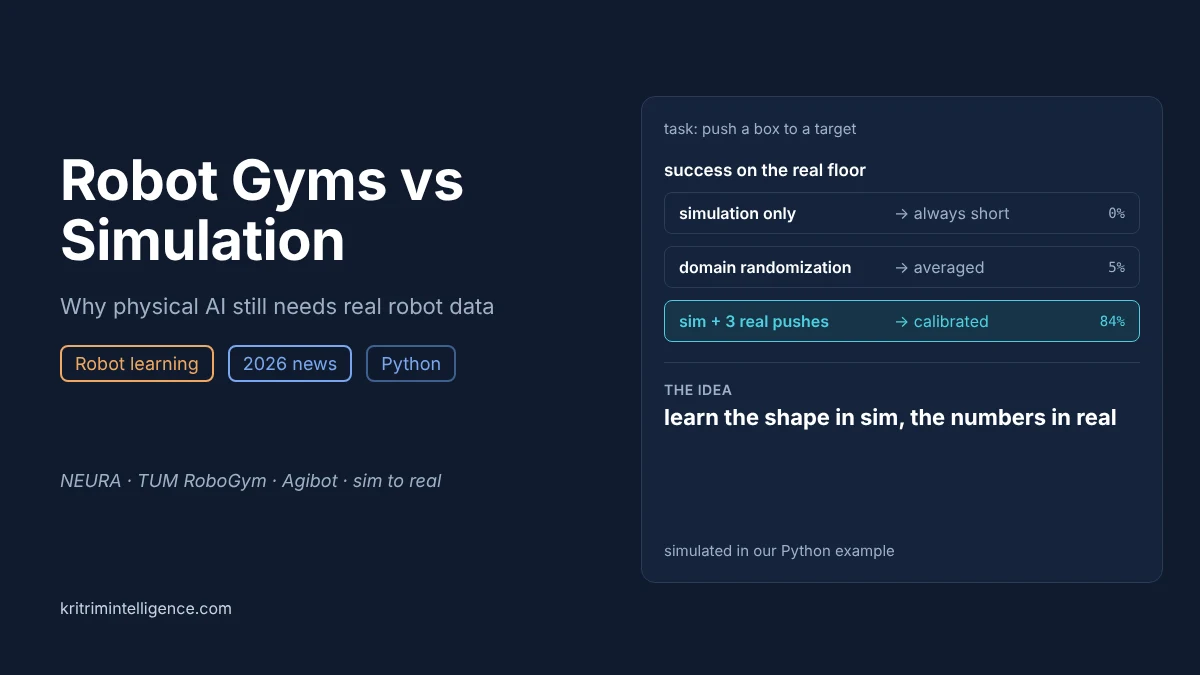
Robot Gyms vs Simulation: Why Physical AI Still Needs Real Robot Data, with Python Code
Robot gyms vs simulation: why NEURA and China build real robot training centres, the sim to real gap, domain randomization, and a Python demo.
Read the articleWe build spatial intelligence for robots. Right now that means a SLAM based drone, built and tested in simulation first, so it can map, plan and fly where GPS cannot reach.
Robot gyms vs simulation: why NEURA and China build real robot training centres, the sim to real gap, domain randomization, and a Python demo.
Read the article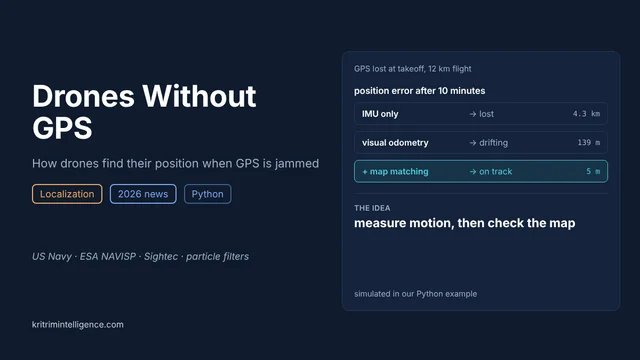 Robotics How Drones Fly Without GPS 30 Oct 2026 · 15 min read
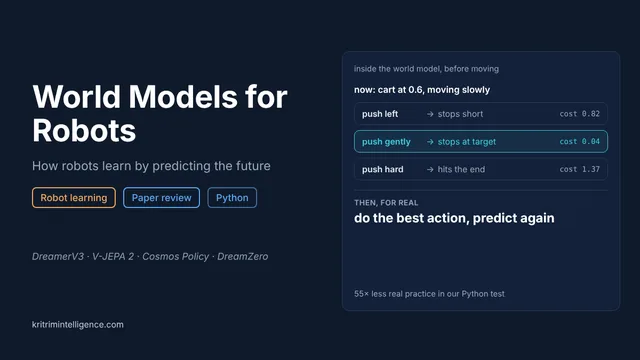 Robotics World Models for Robots Explained 29 Oct 2026 · 11 min read
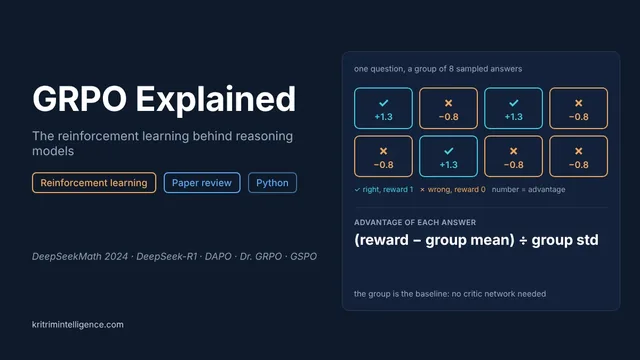 Reinforcement learning GRPO Explained 27 Oct 2026 · 12 min read
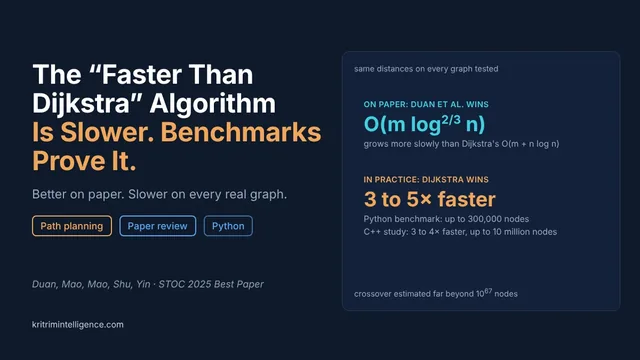 SLAM The "Faster Than Dijkstra" Algorithm Is Slower Than Dijkstra. The Benchmarks Prove It. 25 Oct 2026 · 15 min read
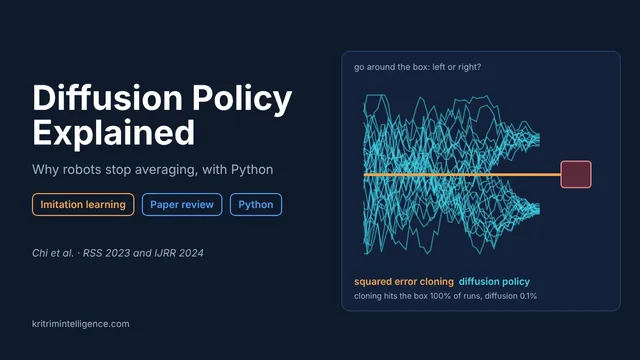 Robotics Diffusion Policy Explained 25 Oct 2026 · 13 min read
Four areas, one goal: a robot that knows where it is and decides well what to do next.
Visual and inertial mapping that keeps a robot localized indoors, underground and anywhere satellites drop out, with planners that turn the map into a safe route.
Perception that runs on the robot itself: detection and recognition today, and learned 3D models that make maps denser and tracking more reliable.
Robots that learn decisions from experience, built on the math of Markov decision processes.
Robots that learn skills by watching people, and the hardware and control that let them act on what they learn.
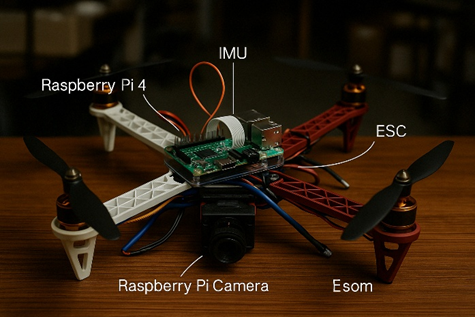
Veg maps its surroundings with visual inertial SLAM, plans its own route, recognises people and objects onboard and lands safely after a rotor failure. The research version runs entirely on a Raspberry Pi 4 and an Arduino Nano, and is described in a paper on arXiv.
Now: building Veg 3.0 in simulation

New to a topic? Each path goes from the basics to this year's research, one article at a time.
We are looking for research partners, pilot customers and engineers who want robots that work without GPS.